I use AI every day. It drafts my proposals, tidies my notes and summarises research faster than any assistant I’ve hired. So when clients started telling me they had “already asked ChatGPT about their cards,” I didn’t feel defensive. I was curious.
So I ran an experiment. I read the same spread twice, once through a standard AI prompt and once the way I work in a live session, and compared the results.
The Setup
The scenario is a composite of several real consultations, with details changed. Call her R. She is a senior sales director at a large consumer company. She had been offered a promotion to Business Head: nearly 40% more pay, a bigger title, and a leadership culture she described flatly as “brutal.” The alternative was to leave and build an independent advisory practice, at roughly half her current income for at least two years.
Her question was: “Which path makes more strategic sense?”
We used a simple four-card decision spread:
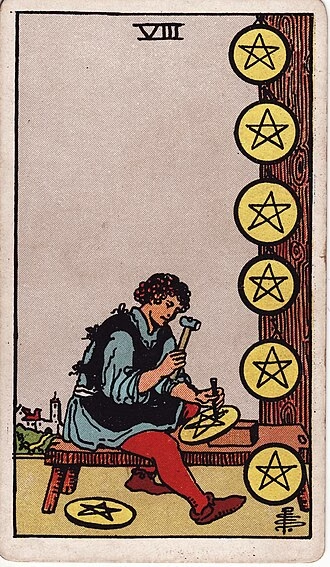
- Card 1, The Stated Goal: Eight of Pentacles
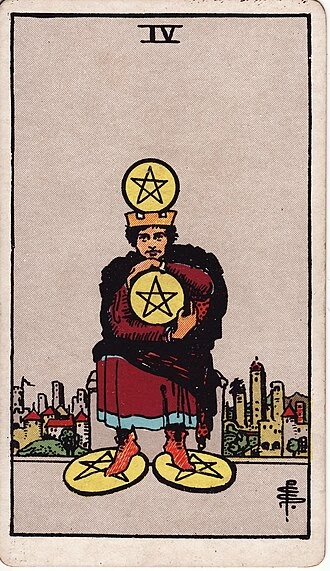
- Card 2, The Hidden Driver: Four of Pentacles
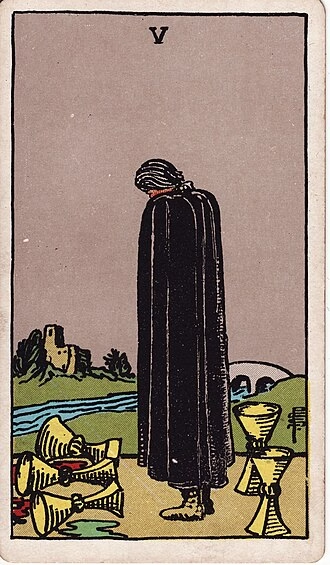
- Card 3, The Unexamined Trade-Off: Five of Cups
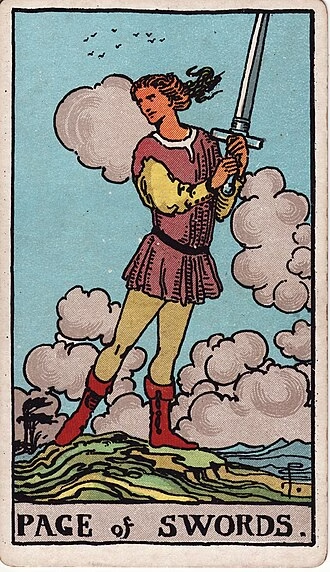
- Card 4, The Next Reversible Step: Page of Swords
I typed the scenario, the spread and her question into ChatGPT, using the kind of prompt most people write: “Interpret this Tarot spread for my career decision.”
Part 1: What ChatGPT Got Right (And Why People Fall for It)
The response came back in seconds, and it was good.
It said the Eight of Pentacles reflects dedication, skill-building and mastery. The Four of Pentacles points to a need for security and a reluctance to let go of resources. The Five of Cups invites acknowledging loss while noticing what still remains. The Page of Swords encourages curiosity, research and clear communication. It closed with a balanced paragraph saying both paths had merit, and that she should “trust her values” and “take time to reflect.”
Every card meaning was textbook-accurate. The structure was clean, the tone was warm, and there was no judgment, which matters to people who feel embarrassed about asking. If you want a fast, fluent synthesis of what cards traditionally mean, AI is excellent.
That fluency is exactly the problem.
The response comforted her because it validated both options equally. It told her nothing she didn’t already know. It was a well-formatted restatement of her indecision, and she’d been stuck in that loop for six weeks. A beautifully written summary of the loop does not get you out of it.
The AI wasn’t wrong. It was averaged. It read the cards the way you’d read them for anyone, and R. wasn’t anyone.
Part 2: The Four Things the Machine Missed
1. The Flinch and the Pause
When the Four of Pentacles turned over in our session, R. laughed and said, “Well, obviously. I have an EMI and two kids in school.” Then she spent nearly three minutes explaining her finances, which I hadn’t asked about.
When the Five of Cups came up, she went quiet. She leaned back and folded her arms. Her answer to “What do you notice here?” was four words long.
A text prompt can’t see any of that. Yet the gap between what someone says they want and how their body responds to a particular image is often the most useful data in the room. Over-explaining usually marks a position someone is defending. Silence usually marks one they haven’t let themselves look at.
2. The Unasked Question
R. framed her dilemma around money and strategy, and the money was real. But it was also tidy. Money is a respectable problem, the kind you can bring to a mentor or a spreadsheet.
The Five of Cups pointed to something she hadn’t brought into the room at all. When I gently asked about it, the real weights came out. She was grieving the team she had built over nine years, and her father, who had never had a corporate title, spoke about hers at every family gathering.
Leaving wasn’t a financial loss. It felt like a status loss and the prospect of letting someone down. The strategy question was simply the safer question to ask.
3. Card-to-Card Friction
The AI read four cards in four separate paragraphs, one after another. That’s how a summary works, but it isn’t how a pattern works.
A seasoned reader looks at how the cards press on each other. The Eight of Pentacles next to the Four of Pentacles changes the story. Diligence fused with holding on often signals over-functioning out of scarcity: working harder to feel safe, not to build something.
That reframes the promotion. Was it ambition, or one more wall around the fear of losing ground? Read through that lens, the Five of Cups becomes the cost of the pattern, and the Page of Swords stops being a leap. It becomes a small, information-gathering test.
None of those connections appear in a card-by-card summary, because none of them live in any single card.
4. The Reframe Question That Breaks the Loop
About forty minutes in, I asked her:
“If the money were exactly equal on both paths, which one would you be relieved to turn down?”
She answered in under five seconds. Then I asked the uncomfortable follow-up:
“Who are you afraid of disappointing if you say that out loud?”
To be fair, AI can be prompted to challenge you. But you have to know where to point it, and a blind spot is, by definition, the place you don’t know to point. Left to its defaults, a model tuned to be helpful and agreeable will almost never push you there.
R. didn’t resign the next morning. In the spirit of the Page of Swords, she chose a reversible step. She asked her company for two weeks to decide and booked three conversations with former colleagues who had gone independent. The decision stayed hers, and for the first time in six weeks it was moving.
The Takeaway
Here is the clearest way I can put it: AI gives you fluent answers. An experienced practitioner helps you audit the question.
Use both. Let AI handle synthesis, drafting and the textbook meanings. But when a decision has stalled, the problem is rarely missing information. It’s usually a missing admission, and that only shows up in a live conversation with someone trained to notice what you skip over.
This is reflective, advisory work. It doesn’t predict outcomes and it isn’t therapy. It’s a structured way to see your own thinking more clearly.
If you’re carrying a decision that a well-written summary hasn’t resolved, I offer a 75-minute Decision & Blind-Spot Audit. We map the spread, the assumptions and the trade-offs together. Within 48 hours you’ll receive a written Executive Clarity Summary covering what emerged and the questions worth taking forward.
There’s no rush. If it’s the right time, you’ll know.